Garden Clearance in Battersea

Garden clearance in Battersea helps turn overgrown, cluttered, or hard-to-use outdoor spaces into areas that are ready for their next stage. Whether you need a one-off tidy-up after a long period of neglect, removal of unwanted garden materials, or a more structured clear-out before landscaping, our service focuses on practical work that is safe, orderly, and suited to the amount of waste involved. We handle mixed green waste and non-organic items, and we keep the process straightforward from the first enquiry to the final load.
For many customers, the main aim is not simply to take things away, but to make the garden easier to use again. That can mean clearing broken plant pots, lifted timber, rotted sheds, bags of soil, hedge cuttings, and old outdoor furniture in one visit. We can also remove loose debris from paths, patios, and borders so the space feels more manageable. If you are comparing options, clarity about what needs removing is often the best starting point before requesting a quotation.
Alongside the physical clearance work, we help keep the job organised by separating suitable materials where possible and planning the load around access, volume, and the type of waste present. This matters in gardens because clearances often involve a mixture of items rather than one neat category. If you would like a simple way to begin, make a note of the items you want gone and ask for a quotation. That gives you a useful basis for deciding how best to move forward.
Garden waste, green materials, and mixed outdoor items
Garden clearance rarely means leaves and grass alone. In Battersea, outdoor spaces can include planted beds, narrow side returns, raised planters, paving, trellis, broken containers, and stored items that have slowly built up over time. Our work can cover the removal of seasonal cuttings, branches, hedge trimmings, weeds, root balls, and general garden refuse, but also non-green items that have become part of the same clear-out. That mixed approach is often more useful than treating each material separately.
We also clear items that affect how the space is used day to day. Old compost sacks, cracked ornaments, damaged fencing sections, children’s outdoor toys, and weathered storage pieces can all create a garden that feels cramped even when the planting itself is not the issue. A good clearance plan usually starts with deciding what should be kept, what should be recycled, and what should be taken away. Sorting first saves time and makes the collection more efficient.
Useful items to identify before you ask for a quote include:
- green waste such as cuttings, leaves, hedge trimmings, and small branches
- broken or unwanted garden furniture, plant pots, and decorative pieces
- old timber, edging, panels, and other dismantled outdoor materials
- bagged waste, loose debris, and mixed items gathered from sheds or borders
Clearance for sheds, borders, and storage spaces

Some of the most time-consuming jobs involve spaces where garden waste has mixed with storage. Sheds, side passages, under-deck areas, and corners behind planting can collect everything from damp cardboard to tools that are no longer used. Our garden clearance service can be arranged to help remove the clutter that blocks access and makes the rest of the job harder. Where appropriate, we can take out redundant items first so the remaining waste is easier to reach.
This sort of work is especially useful when a garden has been used for storage during building work, a house move, or a long period when maintenance was delayed. It is not unusual to find several kinds of waste together, so the practical question is often how to clear the space in the right order. Access matters, and careful handling matters too, particularly where there are fragile objects, sharp edges, or heavy pieces near planting and paving.
In straightforward cases, the scope may be as simple as removing accumulated waste from one part of the garden. In more involved cases, a clear-out can include multiple layers of material spread across the space, from topsoil bags and pots to disused furniture and dismantled timber. Either way, the aim is to leave the area ready for cleaning, replanting, or whatever you have planned next. If you already know which areas need attention, a quotation request will usually be more helpful than a broad estimate.
Why a structured clearance plan helps
Garden jobs often look smaller before they are moved, which is why an organised approach is useful. We plan around the type of material, how it is stacked or spread out, and whether anything needs gentle handling. That is particularly important where waste is mixed with items that could break, leak, or shed soil while being carried. A structured plan helps keep the work efficient and avoids unnecessary back-and-forth through the property.
There are also practical decisions to make about what is reusable, recyclable, or simply ready for removal. Some customers want a complete clear-out before garden design work begins, while others only need certain areas opened up so they can keep maintaining the rest themselves. The service can be adjusted to suit either approach. If you are comparing different clearances, it helps to look at the actual waste rather than assume all garden jobs are the same.
When describing the work, it can help to mention whether the garden includes steps, narrow gates, rear access, or uneven ground. Those details do not need to be complicated, but they do shape the most practical way to carry out the clearance. A little useful information at the start can make the quotation more accurate and easier to understand.
Pricing factors and quotation details
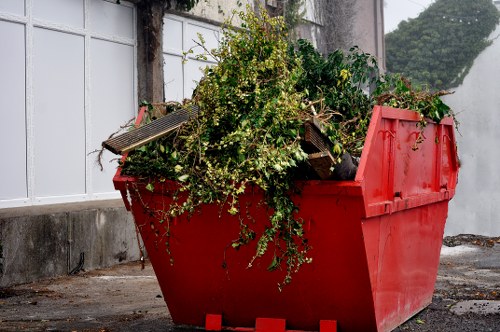
Garden clearance pricing usually depends on the volume of waste, the mix of materials, and how easy it is to move everything safely from the garden to the collection point. Heavier items, awkward access, and mixed loads can all affect the amount of work involved. We do not publish fixed prices here because the right figure depends on the specific job. A clear description of the items involved is the best way to start the quoting process.
For many customers, it is helpful to think in terms of what will actually be removed rather than simply how long the job might take. A pile of hedge cuttings, for example, has different handling needs from a stack of broken fencing, while a combination of soil, bags, and garden furniture creates a different sort of load again. If you want to prepare your enquiry well, one brief list of the main items is usually enough. Then you can request a quotation and compare it against the amount of work described.
Short, practical details often make the process smoother:
• the main items or materials to be removed
• whether anything is stored in a shed, corner, or side path
• how easy it is to reach the garden from the street or building
• whether the clearance is part of a larger garden tidy-up or a one-off removal
Preparing a garden for clearance
Before a clearance, some customers prefer to separate items they want to keep, especially where planting tools, pots, or outdoor equipment are mixed in with waste. That is sensible, but there is no need to turn the process into a major project. The main point is to make sure the items meant for removal are easy to identify. If there are breakables, loose fixings, or anything that should not be moved with the rest, it helps to mention that when asking for a quotation.
If you are still deciding what to include, it can be useful to walk through the garden once and note the different zones in plain terms: patio, lawn, side return, shed, borders, or rear corner. This is not about creating a formal survey. It is simply a practical way to describe the work so that the clearance can be planned accurately. A short set of notes is often more useful than a long explanation.
Where the garden includes old furniture, stored materials, and organic waste together, a single clear-out can often be better than multiple small removals. That reduces repetition and helps free the space in one organised visit. If you need the whole area dealt with rather than just one section, say so when you request a quotation. Be specific about the parts that matter most.
Garden clearance for tidying, replanting, and better access
A cleared garden is easier to inspect, maintain, and improve. Once waste has been removed, it becomes simpler to see the condition of borders, paving, fences, and stored structures. That can be especially valuable before replanting, laying new features, or simply restoring order to a space that has become difficult to manage. Our service supports that next step by removing the material that is getting in the way.
Some customers need the whole garden opened up so they can start fresh, while others only need enough removed to regain safe access or create a usable outdoor area again. Both are valid reasons for arranging a clearance. The important thing is to match the scope of the work to the actual state of the garden rather than to an assumed category. A good clearance should feel proportionate, not generic.
In practical terms, this can include removing waste from open areas, clearing piled materials from around structures, and taking away items that are no longer needed once the garden is back under control. If the garden contains a mix of light and bulky items, it may be helpful to prioritise the larger pieces first so the rest of the clearance can proceed more smoothly. For a straightforward next step, ask for a quotation and describe the main items that need to go.
About Battersea
Battersea is a district in south-west London on the south bank of the River Thames, within the historic county of Surrey and now part of the London Borough of Wandsworth. Its riverside position has shaped much of its development, from the industrial and transport corridors that once lined the river edge to the residential growth that followed later urban change. Battersea Park is one of its best-known open spaces, offering wide paths, ornamental planting, sports facilities, and a direct riverfront setting that contrasts with the denser streets inland. The district is also associated with Battersea Power Station, a landmark whose distinctive brick towers became a recognised part of the London skyline and whose redevelopment has brought new uses to the wider area. Away from the river, Battersea includes a varied street pattern of terraces, mansion blocks, and newer developments, together with local shopping streets and community facilities that reflect its long evolution. The area has strong transport connections through rail, bus, and the nearby Underground network, but it remains recognisably shaped by its own streets and landmarks rather than by the larger city around it. Its name is linked historically to the River Thames and to early settlement along the waterfront, while modern Battersea combines that older identity with parks, housing, and active neighbourhood life. The result is a place with a clear local character, where the built environment, river setting, and public green spaces all play a visible part in everyday life.
Domestic garden clear-outs and outdoor household items

Many garden clearance jobs are connected to the home as much as to the outside space. Old chairs, broken parasols, unused planters, faded play equipment, and weather-damaged storage containers can all accumulate alongside normal garden waste. Our domestic clear-outs focus on removing those items in a controlled way so that the garden is left easier to use. That can be helpful after a seasonal tidy-up, a house move, or a long period when the outside area was not prioritised.
Where a garden forms part of a wider household clear-out, it is often best to think about how the outdoor items fit with the rest of the work. A garden may contain items that are too bulky for ordinary bin collection but do not belong with building rubble either. We can help bridge that gap by taking a practical approach to removal. The aim is to keep the job tidy, avoid confusion, and make sure the right waste goes with the right load.
Good organisation helps here too. A brief description of the items, plus any access details that matter, is usually enough to begin. If you are unsure whether something counts as garden waste, outdoor furniture, or mixed household clutter, it is better to list it than leave it out. That gives a clearer basis for a quotation and helps avoid unnecessary back-and-forth before the work is arranged.
What to expect from the collection process
Once the scope is agreed, the collection process is mainly about handling the waste safely and removing it without making the surrounding area more untidy. Depending on the layout, that may involve carrying items from a rear garden, moving bags and loose waste through a side access route, or clearing materials from several points in the same property. The exact method depends on the space, but the standard remains the same: the job should be carried out neatly and with attention to the materials involved.
Clearance work is often more efficient when the waste has been grouped in advance, but it is not essential for every job. If the items are still spread through the garden, we can work from the different sections in a sensible order. What matters most is a straightforward description of the scope so the collection can be planned properly. Customers often appreciate that the process is practical rather than complicated.
After the main removal is complete, the remaining space is usually much easier to assess. That can make it simpler to decide what to do next, whether that means cleaning paths, cutting back planting, or planning a fresh layout. If you want the work carried out without delay in the planning stage, the most useful step is still to request a quotation and outline the main waste types clearly.
Recycling and responsible handling of garden waste
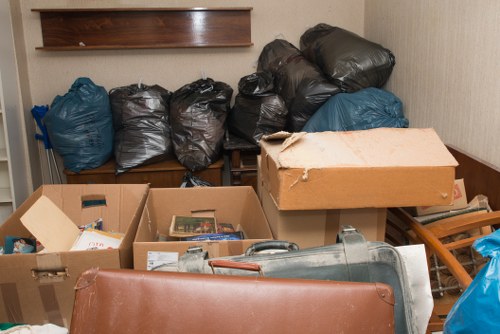
Garden clearance often produces materials that need different handling, so responsible sorting is an important part of the service. Green waste may be suitable for composting or other forms of recovery, while timber, metal, plastic, and mixed outdoor items may need separate treatment depending on what they are and how they have been stored. We approach the work with that variety in mind rather than treating every item as if it were identical.
This matters because outdoor clearances can contain far more than cut grass and branches. Old pots, metal frames, broken fittings, and deteriorated furniture can all be mixed into the same load. A sensible approach is to collect everything efficiently while keeping the material types clear enough for proper onward handling. That makes the service more organised and helps ensure that the garden is cleared in a way that suits the waste present.
If you are ready to move ahead, send a brief description of the items and ask for a quotation. We can then assess the likely scope and provide a practical response based on the clearance work itself. For many customers, that is the simplest way to turn a cluttered outdoor area into something usable again.